Old Caxtonians
12 Jun 2026
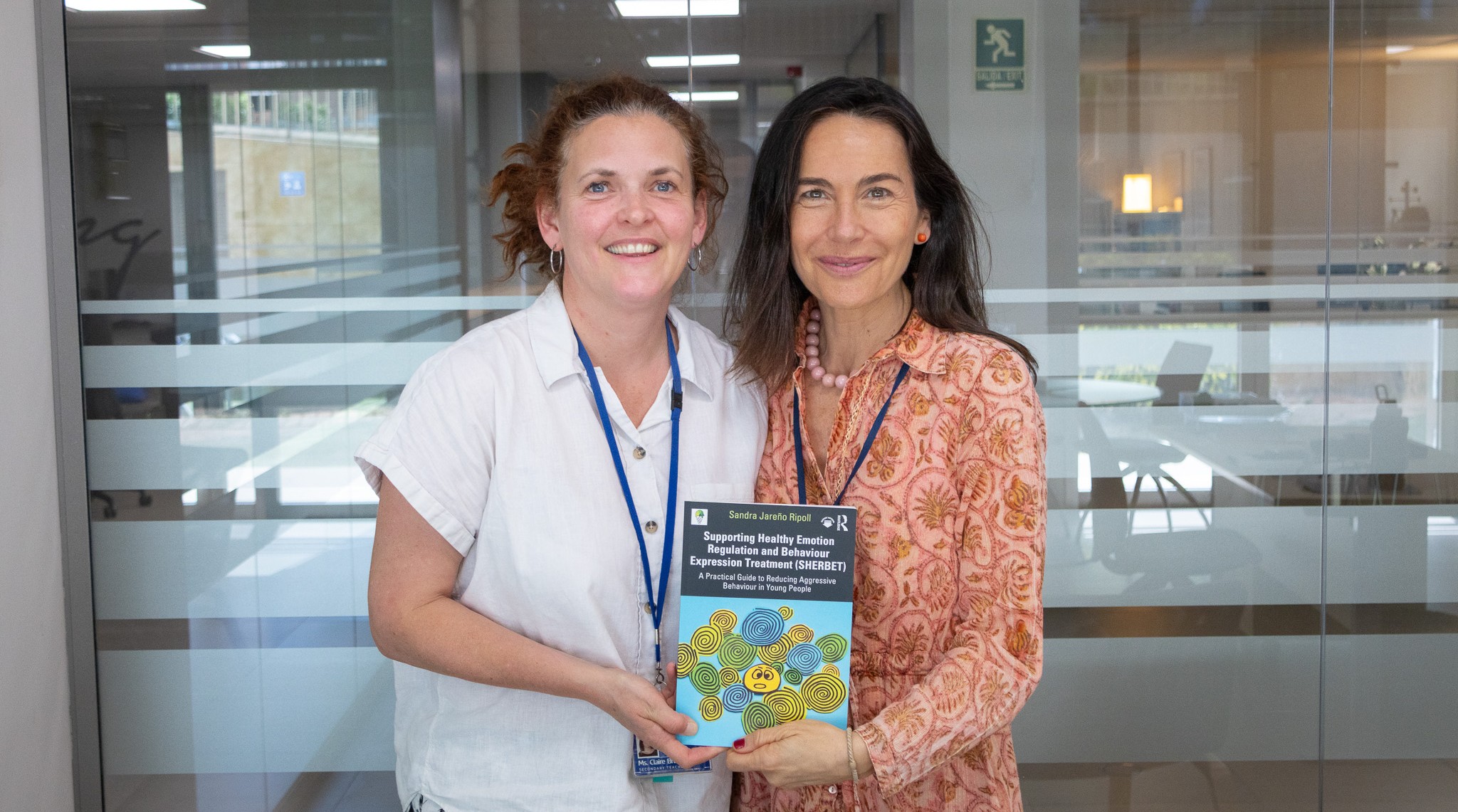
Dr Sandra Jareño Ripoll, a member of our 16th cohort, forensic psychologist and researcher working in the Nottingham prison service, talked to us about her recent achievement in becoming a published author and how her educational path led her to this field.
What inspired you to go into the field of psychology?
I wish I had a more interesting answer! The reality of it for me is that something just ‘clicked’. I always felt interested in psychology – what makes people tick, for both the best and worst parts of themselves. I simply followed the interest, and at every step of the way it settled more and more into the ‘right path’ for me.
I was very lucky to be supported in this journey from a young age. My parents were always open to buying books – even psychology and crime books that probably weirded them out a bit. They were curious about my interests, spoke to me about them and they never shut them down. I really don’t think I would be where I am without that early support.
And I feel like I definitely had a safe space at Caxton College to explore my interests. Ms Brunell’s Psychology class, being able to start exploring the subject from GCSE, was definitely a first step in the right direction. And, of course, Sociology with Ms Wisden was another stepping stone. The breadth of topics, especially more forensic ones, really helped me feel more comfortable exploring and understanding the field. I remember one question was that we had to think about practical barriers to conducting research in prisons – even down to things such as ‘is it safe to give a prisoner a pencil or will they use it as a weapon?’ (Thus far, in my experience, the answer would be that a pencil is usually fine, but always be aware of situational safety!). The fact that I could be aware of those risks, plan for them, consider them, and still be interested in doing more definitely encouraged me to keep pursuing the field.
Finally, I can never stop myself from praising the role that English Literature GCSE and A-Level had in my psychology development. Psychological formulation and text analysis have so much in common – you’re trying to piece together clues, never truly knowing if they were intentionally left, to bring together meaning and understanding of a coherent whole. Trying to break down what a poem really means, and how the author may have been affected by the context of their time is remarkably similar to understanding what a person’s actions meant and how they were influenced by their circumstances and upbringing.
And, of course, Mr Miller and Ms Shaw were absolutely brilliant at helping me link my interests to my studies. Did you know that one of my A-Level English Literature coursework titles was ‘To what extent are the texts of your choice ('Lolita' by Vladimir Nabokov and 'The Collector' by John Fowles) a moral criticism rather than a subversion of the romantic genre?’ If that doesn’t scream budding forensic psychologist, I don’t know what does.
So yes, I had a passion, an interest, that felt very innate. But at every step I pursued ways to experience it, explore it, and I was lucky to be supported in that endeavour. Most importantly I’m trying to say that opportunities to do this exploration sometimes came from unexpected places, and keeping my eyes open wide so I could grasp the opportunities available to me at a young age was key to establishing my confidence in this field.
What path led you to the research required for the book you have just had published, Supporting Healthy Emotion Regulation and Behaviour Expression Treatment (SHERBET)?
I moved to the UK to study and, whilst completing my undergraduate degree in Psychology I started volunteering to work with children and young people involved in the criminal justice system. I delivered rehabilitation sessions to children ages 12-17 in a variety of areas: healthy relationships, victim awareness, substance misuse, safer driving, conflict resolution… But my key area was always knife crime.
When I moved on to complete my doctorate in forensic psychology, I focused my thesis on young people involved in knife crime. It was a very relevant topic in the UK but I felt that it was an unfairly represented topic, pushed by the media and tabloids to cause fear. I had worked with young people who had carried and been involved in knife crimes for a few years at this point. I knew that, far from just being violent antisocial boys, these were children with trauma, fear, and a lack of resources and skills to manage the difficult environments they lived in.
The research I carried out throughout my doctorate enabled me to justify the need for an early-help intervention to try to prevent young people from getting involved in knife crime and other violent behaviours. Interventions at that time did not sufficiently scratch the surface of the anger management and emotional regulation needs underlying the behaviour.
Alongside this work I was doing my trainee placements, where I was very lucky to work with a range of children, young people and their families. I landed in the mental health support team (MHST) and realised that there was a lack of early help for those young people who struggled to manage their emotions, especially anger. These children were known for their problematic behaviours, got kicked out of friendships, classes, schools… Exactly the types of children that were at risk of becoming antisocial later in life.
These children fell between the gaps. They were not risky enough to get picked up by child and adolescent mental health services, but early help services like MHST did not yet have the tools to work with them. So together with Nottingham’s MHST, I created a tool for them. We tested it in a few schools, gathered feedback and outcome measures. Not only did we find that schools and students liked the programme – but they actually benefitted! School noticed a significant reduction in these ‘problem behaviours’ and the children felt more confident and able to communicate themselves.
I am so proud of the impact that SHERBET had in those first schools and I simply knew that it could have a massive impact if given the chance. I took a chance on this book, on myself, and sought to publish it so it could reach as many people as possible. Lucky for me, the publishers at Routledge believed in SHERBET too.
You have studied, lived and worked in the UK for a number of years now. What role do you believe Caxton College played in leading you to an international career path?
I believe that the beauty of Caxton College is that it gives you the choice. For me, that choice came in the form of exposure to language, culture, and different ways of learning. By the time I left school, after 17 years there, I confidently spoke Spanish, English and French. I had exposure to a breadth of cultures and experiences from a range of teachers and peers.
However, the most important choice I made was regarding my learning. Throughout my whole education I was able to try both the Spanish and English education systems. For my brain, I always felt more aligned to the British learning style. I was never very good at memorising things, and I thrived with the practical applications, links and coursework I did in my English subjects. Thanks to these experiences I realised that I needed to go to a UK university to really get the most out of higher education.
Even now, Caxton keeps me international by keeping me connected to Spain. I love being able to give back to the community, so I regularly give talks (some online) at school on a variety of topics like what it’s like to study in the UK or work in psychology. Even with this blog I keep some ties across the sea!
What recommendations would you make to current students at Caxton College?
If you are going to take away one thing from this blog, it is to be curious. You have so many opportunities here at Caxton College (and many other places in your future), and not all of them will be obviously linked to the path you want to take. Staying curious so you can explore different paths, subjects, languages and cultures will enable you to make the most of what’s on offer and hopefully get you at least one step closer to where you want to be.
Related posts