Our School
19 Jun 2026
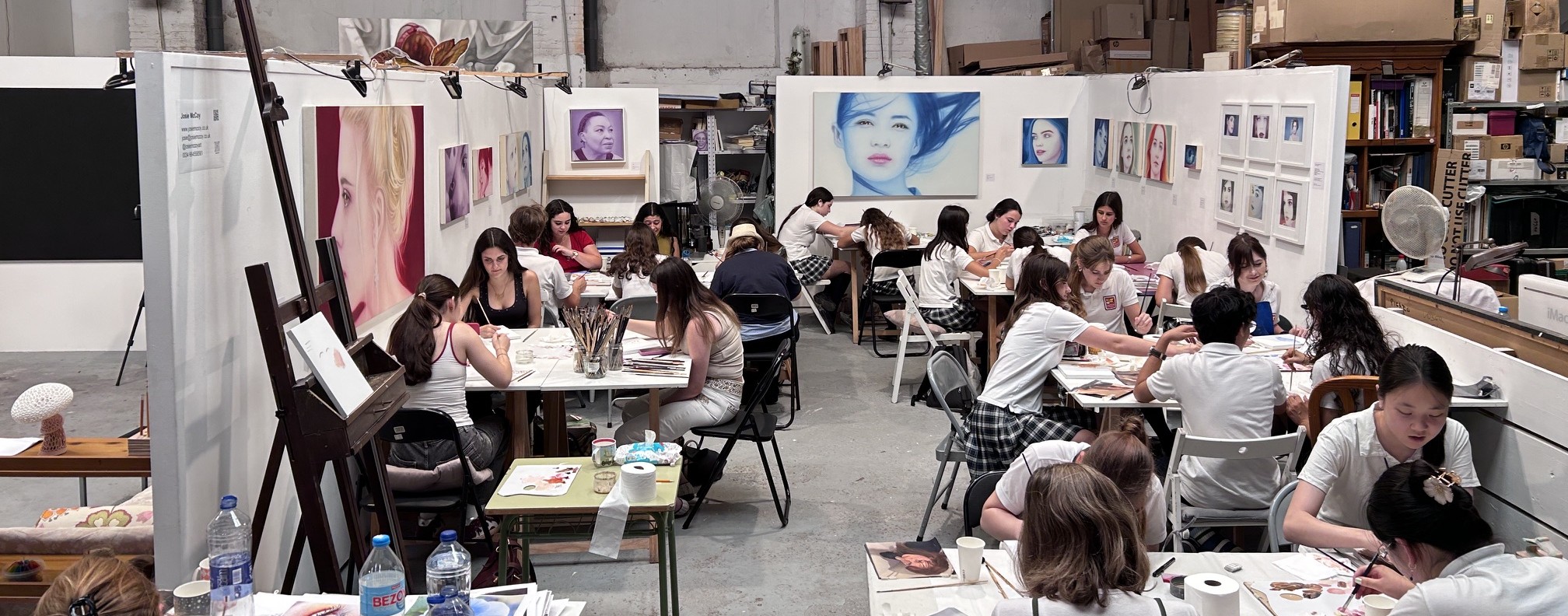
We were delighted to have the opportunity to interview Josie McCoy after her visit to school to inaugurate the GCSE and A Level Art students' exhibition and find out her impressions of their work.
Having recently visited Caxton College and seen the artwork of our GCSE and A Level students at the exhibition opening, what were your overall impressions? What advice would you give to these young artists as they celebrate concluding their intense two-year courses?
I was very impressed with the level of the artwork on display at the GCSE and A Level exhibition. The students were incredibly eloquent when talking about their work, explaining why they made it, how they developed their ideas, and the challenges they faced along the way. It was obvious that there’s an excellent art department at Caxton.
My advice would be to keep making art. The artists who improve the most are usually the ones who keep turning up and making things. I’d also encourage them to feel proud of what they’ve made.
One of the themes our students explored was the Human Condition. How would you relate this to your own painting, which features portraits in your Contemporary Icons or Real People series?
I paint portraits of fictional characters from films and television series. I’m particularly interested in moments of heightened emotion, and I often use the cinematic device of the close-up, which usually signifies an important emotional moment in a narrative.
My Real People series consists of commissioned portraits, which is a slightly different process from working from film stills. However, both approaches are really trying to get to the essence of the subject. Whether the person is fictional or real, I’m interested in capturing something of their character and humanity.
You’ve explored some unique technical concepts over the years, such as trying to recreate 3D effects with oil paint in your Paint 3D project. How important is trial, error, and experimentation in your practice, and how can a student overcome the fear of a creative experiment failing?
I would encourage students to make as much art as they can. I love experimenting in my painting practice, and I think I’m a better painter because I’m not afraid for a painting to fail.
The best thing a young artist can do is paint lots and let go of some of the self-consciousness that comes with wanting every piece to be successful. Not every experiment will work, but good things always come from making a lot of work. Sometimes the paintings that teach you the most are the ones that don’t turn out as planned.
In your ongoing Time Series, you’ve noted a fascinating ambition to eventually paint all 24 frames of a single second of film. When undertaking a massive, highly disciplined project like that—for example, when our students face a demanding two-year art curriculum—how can an artist maintain their focus, patience and creative energy?
The key is to make the work that you most want to see in the world. If you're genuinely interested in what you're making, it's much easier to stay motivated over a long period of time.
It's also important to set aside regular time to work and make the most of that time. Don’t wait for inspiration to arrive before you start. In my experience, good ideas come from the process of making art rather than sitting around waiting for them.
Sometimes our students experience moments where they feel stuck or uninspired during their coursework. What does a typical day in your studio look like, and what are your go-to strategies for pushing through a creative block when a painting isn't coming together the way you planned?
My typical day starts with some exercise, followed by any small admin tasks that need doing, and then I paint for the rest of the day. If it’s a day when I teach a painting class, I’ll finish painting half an hour before the class so that I can prepare the studio for the students and get everything ready.
I love painting and rarely feel uninspired, but whenever I have doubts, I find it helpful to go and look at some art. Looking at art is hugely inspirational, and I also enjoy reading about it.
If a student gets stuck on a project, I’d recommend finding another artist who has explored similar themes or imagery and spending time looking closely at their work. Read about why they made it and how they approached it. That often sparks new ideas and helps students find their own solutions and strategies.
You can see Josie's paintings on her website and on Instagram: @josiemccoyart
Related posts